

From cooperative to self-serving choices
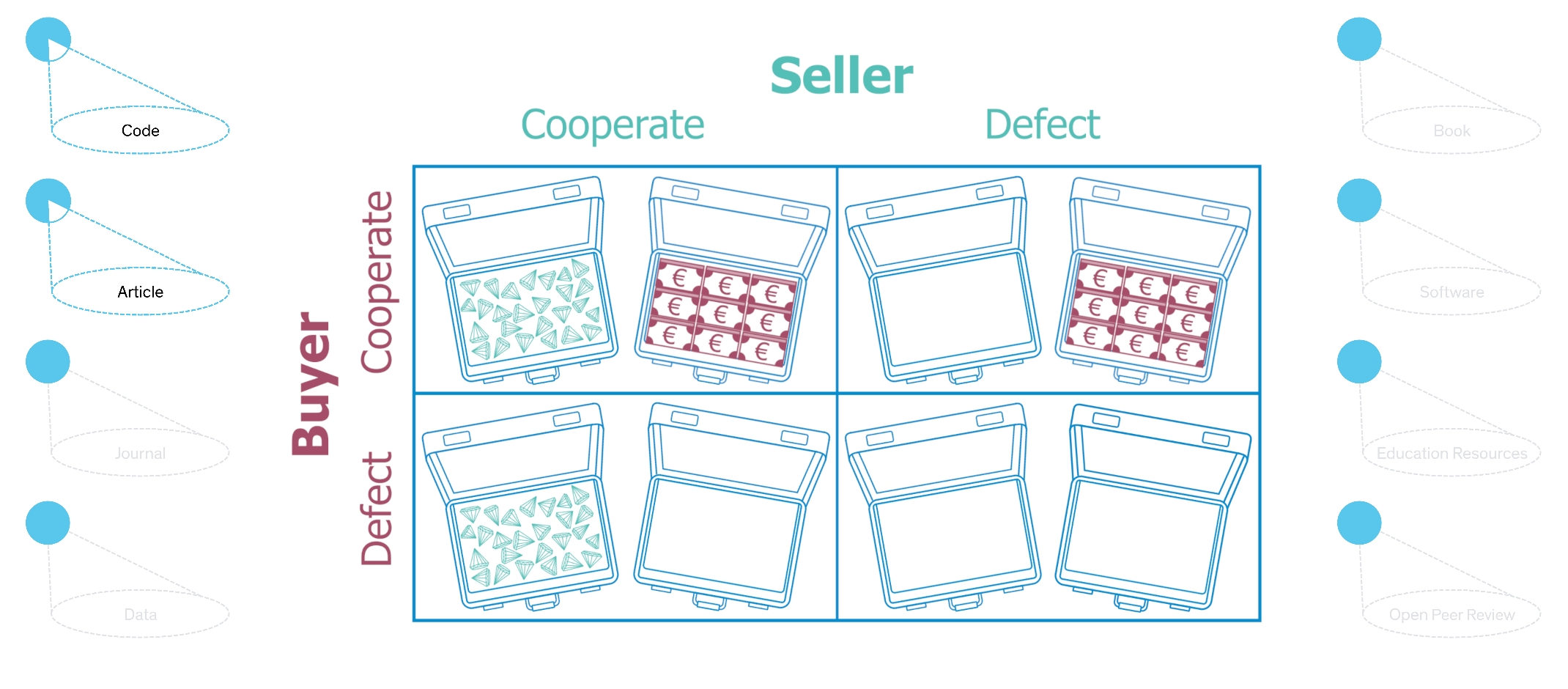
When people make economic decisions repeatedly, they behave very differently. A classic example from experimental economics is the repeated prisoner's dilemma in which two participants choose between two options: one that benefits both of them and one that brings themself a short-term benefit but harms the other person. Some participants always chose the cooperative option, while others always choose the self-serving option or respond flexibly to the other person.
To be able to calculate the proportion of people using each of the different decision-making strategies in an economic study, Fabian Dvorak from the University of Konstanz developed the statistics tool "stratEst". The tool also makes it easy to start analyzing decision-making processes by offering the option to add or edit strategies for analysis as well as tools for data transformation, simulation and model selection. stratEst is a freely available extension package for the open source programming language R.
The data analysis tool "stratEst" (10.32614/CRAN.package.dropR) can be downloaded for free from CRAN or in the author's Github directory.
The accompanying article (doi: 10.1007/s40881-023-00141-7 ) about the analysis tool stratEst is freely available for download from our KOPS publication server or on the Springer Nature website.